Commercial & Industrial Epoxy Floor Coatings in Cooper City FL - a floor that holds up
Peeling, worn or slick shop floor? We test the slab, then coat it to match your traffic, spills and the downtime you can take.
Book a slab test for your business floor
We answer the phone evenings and weekends until 11 PM, so you can call (754) 206-8021 or use the form after your business closes for the day.
What does a commercial epoxy floor coating involve in Cooper City?
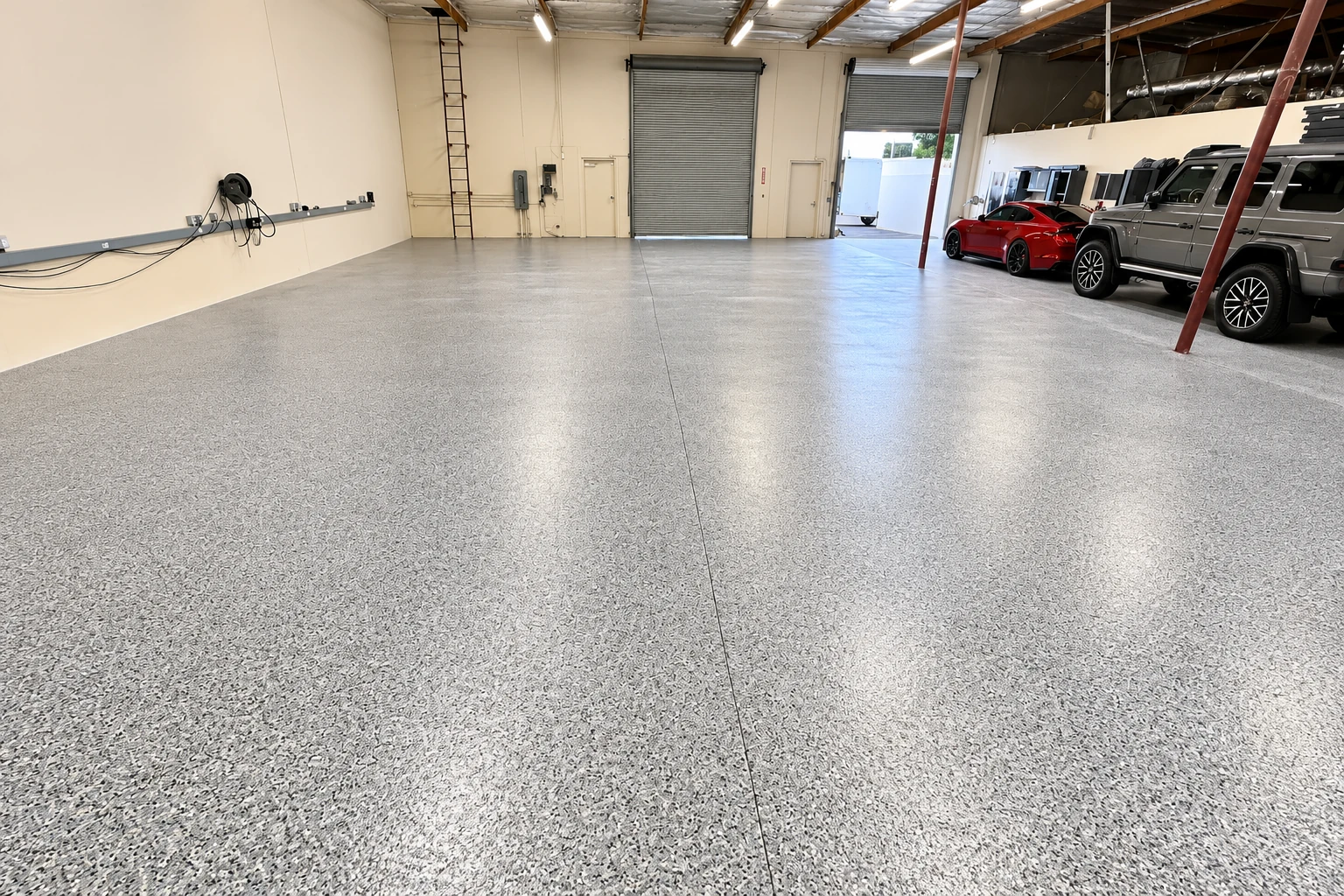
Commercial and industrial epoxy floor coatings in Cooper City start with preparing the concrete, usually by diamond grinding or shotblasting. Then an epoxy coating goes over the slab, giving a shop, warehouse or office a floor that's tougher and easier to clean than bare concrete.
A lot of the shop and office floors I look at already have a coating that's peeling or blistering, or they're bare concrete that's dusty and stained, and the owner wants to know what will hold up this time. I want to know what's under it first, because the slab's condition decides more than the coating does. The price moves with the square footage, how much concrete grinding and surface preparation the slab needs, whether an old coating has to come off, and the coating and grip your traffic calls for. The schedule turns on how dry the slab tests, the weather on install days and how long you can keep traffic off while it cures. Your estimate is written out with the prep, the product and the finish, so you can see what you're paying for before you decide.
Why Cooper City businesses call Northstar Cooper City Epoxy Flooring
The owner tests your slab
I come out myself to look at the floor and test the slab. Most coating problems start underneath, so I'd rather tell you a hard truth at the estimate than have you find it later.
A licensed and insured contractor
We're licensed and insured. Under Florida's licensing rules, a certified license covers the whole state and a registered one only where the contractor holds a local certificate, so ask each bidder which they hold.
Our own installers since 2021
We've been in business since 2021, and our own installers do the prep and the coating. Your floor isn't handed to a crew we've never met, so you know who's working in your space.
We're based in Cooper City and work in the cities around it. If you're sizing up a coating for a shop, warehouse or office, tell us about your floor and I'll come out to look at the slab.
How we handle commercial and industrial epoxy floor coatings
I start by asking what rolls over the floor, what spills on it and how long you can close the space, because those three answers pick the coating more than any brochure does. Then we match the coating, its thickness and the grip to that use, and build the schedule around your hours. Our installers grind the concrete so the coating has clean, open slab to grab onto, then lay the coating and any grip in the top coat. We follow the maker's cure guidance before traffic comes back, since rolling a cart or a forklift over a floor too early can mark or lift a fresh coating.
When a business can't stay closed for long, we may talk about polyaspartic floor coatings, which usually cure faster than epoxy. And owners who like how their shop floor turns out often ask about home next, where our garage floor coatings use the same prep on a smaller slab.
Thin epoxy coat for lighter duty
This suits offices, storage rooms and dry areas with foot traffic and light carts. One maker doesn't recommend its thin coat where chemicals sit on the floor for long stretches, so we ask about spills first.
Thicker build for heavy use
This suits shops, warehouses and floors with forklifts, heavy carts or regular chemical spills. A heavier system usually stands up better to that kind of wear, and we'll explain why it's worth the extra material.
Added grip for wet or oily floors
This suits kitchens, wash bays and shop floors where water or oil lands, because a smooth coating gets slick fast. We set the texture so it grips without being hard to mop.
How do you know your shop floor needs a new coating?
Coating peeling or flaking
Patches lifting off in sheets usually mean moisture or poor prep under the old coat. Every week of carts and forklifts tears more loose, so the patch you're watching keeps growing.
Bubbles or blisters
Raised bubbles in a coated floor usually point to moisture or trapped air coming up from the slab. Left alone, they break open, collect dirt and let water get under more of the coating.
Dusty, stained bare concrete
Bare slab that sheds dust and soaks up oil is hard to clean and keeps marking product and shoes. The stains sink deeper over time, which makes the prep harder when you do coat.
Slick spots near sinks or bays
If people slide where water or oil lands, the finish has lost its grip or never had any. Waiting only means more close calls on a floor your staff walk every day.
What happens after you call about a commercial floor?
Call and book the slab test
I come out, test the slab and ask how the space gets used. Then you get a written estimate covering the prep, the product and the finish.
Our installers prep and coat
If you go ahead, our installers prep and coat the floor. Weather can push the start, since one maker won't apply its epoxy above 85% humidity or with rain due within 24 hours.
Walk the finished floor together
I walk the finished floor with you and answer whatever questions you have about it. Traffic comes back on the cure schedule we set together.
Questions about commercial epoxy floors
Here's what business owners usually want to know before they close a floor for coating. If your space raises a question that isn't here, ask and I'll explain it as many times as it takes.
How soon can we reopen the floor after an epoxy coating?
For one maker's floor epoxy, light foot traffic can start in 24 hours, light vehicles in 72 hours and heavy traffic in 7 days, at about 70 degrees and 50% humidity. Cooler temperatures add drying time, so most businesses plan their closure around the heavy traffic wait. We'll go over the cure times for the product we choose and plan your schedule around them.
Why do some commercial epoxy floors blister or flake?
Usually it's moisture coming up through the slab. One coating maker says that when concrete lacks an effective moisture vapor barrier, moisture and high alkalinity can blister and flake a coating that doesn't breathe. Another notes that air in the concrete's pinholes expands as the day warms up, so coating while temperatures are rising raises the risk of blisters, and that's why I test the slab before we recommend anything.
Do we need a slip-resistant finish on a commercial epoxy floor?
If the floor gets heavy foot traffic, especially where it's wet or oily, yes, and one coating maker recommends slip-resistant additives for exactly that. The same maker says the business that owns the floor is responsible for meeting current safety standards and local grip requirements, so it's worth knowing what applies to your space. We'll walk through where people step and what lands on the floor, then set the grip to match.
What does a commercial epoxy floor cost near Cooper City?
Epoxy floor coating in nearby Fort Lauderdale usually costs about $3 to $11 per square foot. That's the going rate in the area, not our price, and where your floor lands depends on what the slab test turns up and the system your traffic needs. Your estimate spells out the prep, the product and the finish for your own floor.
How long does new concrete need to cure before it can be coated?
One coating maker says new concrete should cure for at least 30 days before any coating goes on. If you're pouring a new slab or an addition, that pour date sets the earliest we can coat, so tell us when it was poured when you call.
What causes an epoxy floor to turn yellow?
Light is the usual culprit, since one maker states epoxy isn't UV stable and that all epoxy turns amber over time. That matters most in a showroom or lobby where looks count, so in those rooms we'll talk about how much the color shift would bother you before we pick a coating.
Get a written estimate for your floor
Tell us the floor's square footage, how it's used, what rolls and spills on it and the slab's age, and we'll reply within one business day. I'll come out for a free on-site estimate and slab test, with no obligation.
Commercial epoxy floor examples
Other coatings to look at
Garage Floor Coatings
Your home garage takes the same punishment on a smaller scale, from tires and dripping oil to tools dropped on the slab, and it gets the same prep.
Learn morePolyaspartic Floor Coatings
A good fit when a store, office or shop can't stay closed for long and needs a coating that's ready for foot traffic sooner.
Learn more